

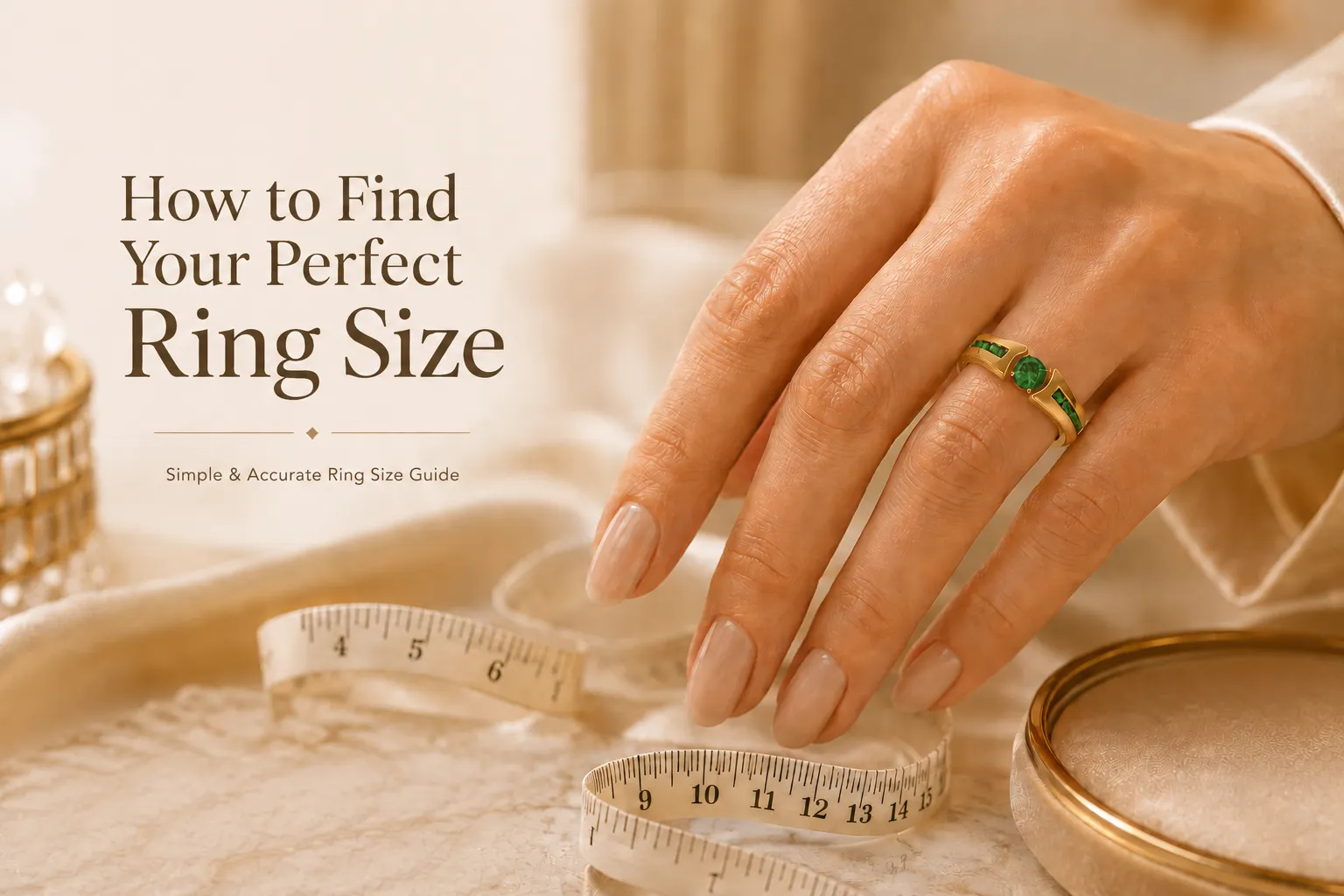
Selecting the perfect ring size is an essential step in choosing a piece that feels as exceptional as it looks. A ring is more than jewellery it is a reflection of personal style, emotion, and timeless elegance. At Barosché, we believe that the perfect fit enhances not only comfort but also the overall experience of wearing fine jewellery.
A well-fitted ring should slide smoothly over your knuckle and sit securely on your finger without feeling restrictive. Whether you are purchasing a statement piece, a gift, or a meaningful symbol, this comprehensive guide will help you determine your ideal ring size with confidence and precision.
Table of contents
- What Is a Ring Size?
- Understanding Ring Fit
- Methods to Measure Your Ring Size
- International Ring Size Conversion Chart
- Important Tips for Accurate Measurement
- Ring Sizing for Different Fingers
- How Climate & Lifestyle Affect Ring Size
- Finding Someone Else’s Ring Size (Gift Guide)
- Resizing Considerations
- Why Ring Size Accuracy Matters
- Still Unsure About Your Size?
- Discover the Perfect Fit with Barosché
- Frequently Asked Questions
- 2. What is the most accurate way to measure ring size at home?
- 3. Should I measure my ring size in the morning or evening?
- 4. What should a perfectly fitting ring feel like?
- 5. What if my ring size falls between two sizes?
- 6. Do ring sizes change over time?
- 7. Are ring sizes the same in every country?
- 8. How can I measure ring size secretly for a gift?
- 9. Can all rings be resized?
- 10. Does ring width affect sizing?
- 11. Which finger should I measure for a ring?
- 12. What if my knuckle is bigger than my finger base?
- 13. How many times should I measure my ring size?
- 14. Can temperature affect my ring size?
- 15. What should I do if I’m still unsure about my size?
What Is a Ring Size?
A ring size refers to the measurement that determines how well a ring fits your finger. It is based on the inner circumference or inner diameter of the ring, ensuring a balance between comfort and security.
Each ring size corresponds to a specific measurement, typically expressed in millimeters. Different countries follow different sizing systems, such as US, UK, or India, but all are ultimately based on the same principle: the exact measurement of your finger.
Understanding Ring Fit
Before measuring your size, it’s important to understand how a ring should feel when worn. The perfect fit is not just about size; it’s about achieving a balance between comfort, security, and elegance.
A well-fitted ring should:
- Slide onto your finger smoothly with minimal resistance
- Sit snugly at the base without causing discomfort or leaving marks
- Remain stable without excessive spinning
- Require slight effort to remove, especially when passing over the knuckle
When these elements come together, the ring feels naturally secure enough for everyday wear, yet comfortable enough to forget you’re wearing it.
1. Understanding Ring Size Measurements
Ring size is determined using precise measurements that ensure consistency across different sizing systems worldwide. There are two primary ways to measure ring size:
2. Inner Circumference
This refers to the total distance around the inside of the ring, typically measured in millimeters. It is the most widely used and accurate method for determining ring size globally.
3. Inner Diameter
This is the straight-line distance across the inside of the ring, measured from one inner edge to the opposite side. It is a simple and effective method, especially when measuring an existing ring that already fits well.
Both methods are interconnected and equally reliable when measured correctly, helping you find a ring size that offers the perfect combination of precision, comfort, and refined fit.
Methods to Measure Your Ring Size
1. Measure Your Finger Using a Paper Strip or String
This is one of the most accessible and widely used methods.
What you’ll need:
- A thin strip of paper, thread, or string
- A pen or marker
- A ruler (preferably in millimeters)
Step-by-step guide:
- Wrap the strip around the base of your finger.
- Ensure it is snug but not tight; comfort is key.
- Mark the point where the ends meet.
- Lay the strip flat and measure the length in millimeters.
- Use the measurement to determine your ring size using a chart.
Tip: Avoid pulling the string too tight, as this may result in a smaller size than needed.
2. Measure an Existing Ring
If you already own a ring that fits perfectly, this method is highly reliable.
Steps:
- Place the ring on a flat surface.
- Measure the inner diameter (straight across the center).
- Compare this measurement with a standard size chart.
This method works best when measuring rings worn on the same finger.
3. Use a Ring Size Chart (Print Method)
You can print a ring size chart and place your ring over the circles provided to find the closest match. Ensure the print scale is accurate (100%) for precise results.
4. Visit a Professional Jeweller
For the most accurate measurement, visiting a jeweller is recommended. Professional tools ensure precision, especially for valuable or custom pieces.
International Ring Size Conversion Chart
Use the chart below to convert your ring size across different international standards. All measurements are based on the inside circumference of the ring.
| Circumference (mm) | US Size | UK Size | France | Germany | India | Italy |
| 44.2 | 3 | F | 44 | 14 | 4 | 4 |
| 44.8 | 3.25 | F 1/2 | 45 | 14.25 | — | 4.6 |
| 45.5 | 3.5 | G | 45.5 | 14.5 | 5 | 5.2 |
| 46.1 | 3.75 | G 1/2 | 46 | 14.75 | 6 | 5.8 |
| 46.8 | 4 | H | 47 | 15 | 7 | 6.5 |
| 47.4 | 4.25 | H 1/2 | 47.5 | — | — | 7.1 |
| 48.0 | 4.5 | I | 48 | 15.25 | 8 | 7.7 |
| 48.7 | 4.75 | J | 48.5 | 15.5 | — | 8.3 |
| 49.3 | 5 | J 1/2 | 49 | 15.75 | 9 | 9 |
| 50.0 | 5.25 | K | 50 | 16 | — | 9.6 |
| 50.6 | 5.5 | K 1/2 | 50.5 | 16.25 | 10 | 10.2 |
| 51.2 | 5.75 | L | 51 | — | 11 | 10.8 |
| 51.9 | 6 | L 1/2 | 52 | 16.5 | 12 | 11.5 |
| 52.5 | 6.25 | M | 52.5 | 16.75 | — | 12.1 |
| 53.1 | 6.5 | M 1/2 | 53 | 17 | 13 | 12.7 |
| 53.8 | 6.75 | N | 54 | — | — | 13.3 |
| 54.4 | 7 | N 1/2 | 54.5 | 17.25 | 14 | 14 |
| 55.1 | 7.25 | O | 55 | 17.5 | — | 14.6 |
| 55.7 | 7.5 | O 1/2 | 56 | 17.75 | 15 | 15.2 |
| 56.3 | 7.75 | P | 56.5 | 18 | — | 15.8 |
| 57.0 | 8 | P 1/2 | 57 | — | 16 | 16.5 |
| 57.6 | 8.25 | Q | 58 | 18.25 | — | 17.1 |
| 58.3 | 8.5 | Q 1/2 | 58.5 | 18.5 | 17 | 17.7 |
| 58.9 | 8.75 | R | 59 | 18.75 | — | 18.3 |
| 59.5 | 9 | R 1/2 | 60 | 19 | 18 | 19 |
| 60.2 | 9.25 | S | 60.5 | 19.25 | — | 19.6 |
| 60.8 | 9.5 | S 1/2 | 61 | 19.5 | 19 | 20.2 |
| 61.4 | 9.75 | T | 61.5 | — | — | 20.8 |
| 62.1 | 10 | T 1/2 | 62 | 19.75 | 20 | 21.5 |
| 62.7 | 10.25 | U | 63 | 20 | 21 | 22.1 |
| 63.4 | 10.5 | U 1/2 | 63.5 | — | 22 | 22.7 |
| 64.0 | 10.75 | V | 64 | 20.5 | — | 23.3 |
| 64.6 | 11 | V 1/2 | 65 | 20.75 | 23 | 24 |
| 65.3 | 11.25 | W | 65.5 | — | — | 24.6 |
| 65.9 | 11.5 | W 1/2 | 66 | 21 | 24 | 25.2 |
| 66.6 | 11.75 | X | 67 | 21.25 | — | 25.8 |
| 67.2 | 12 | X 1/2 | 67.5 | 21.5 | 25 | 26.5 |
| 68.1 | 12.25 | Y | 68 | — | — | 27.1 |
| 68.5 | 12.5 | Z | 69 | 21.75 | 26 | 27.7 |
| 69.1 | 12.75 | Z 1/2 | 69.5 | — | — | 28.3 |
| 69.7 | 13 | — | 70 | 22 | 27 | 29 |
Important Tips for Accurate Measurement
Achieving the correct ring size requires attention to detail. Keep the following in mind:
1. Measure at the Right Time
Your fingers naturally expand and contract throughout the day. Measure your finger:
- At the end of the day (when fingers are largest)
- At a normal body temperature
2. Avoid Extreme Conditions
- Cold weather can shrink your fingers
- Heat can cause swelling
Always measure under neutral conditions.
3. Consider Knuckle Size
If your knuckle is larger than the base of your finger:
- Choose a size that fits over the knuckle
- Ensure it still sits comfortably once in place
4. Measure Multiple Times
Consistency ensures accuracy:
- Measure 2–3 times
- Take the average if needed
5. Wider Bands Need a Bigger Size
Thicker rings sit more tightly on the finger:
- Go half a size up for wide bands
6. When Between Sizes
If your measurement falls between two sizes:
- Always choose the larger size for comfort
Ring Sizing for Different Fingers
Each finger may have a slightly different size. Additionally:
- Your dominant hand is usually slightly larger
- Fingers on the same hand may vary in size
Always measure the specific finger where the ring will be worn.
How Climate & Lifestyle Affect Ring Size
Your ring size can change based on lifestyle and environment:
- Humidity & heat can cause swelling
- Physical activity may temporarily increase finger size
- Diet and hydration can influence measurements
For everyday wear, choose a size that feels comfortable in most conditions.
Finding Someone Else’s Ring Size (Gift Guide)
Buying a ring as a surprise? Try these discreet methods:
- Borrow a ring they already wear and measure it
- Ask friends or family for help
- Compare their finger size visually to yours
If unsure, it’s safer to choose a slightly larger size.
Resizing Considerations
While many rings can be resized, certain designs may have limitations. Choosing the correct size initially ensures:
- Better comfort
- Long-term durability
- Minimal adjustments
Why Ring Size Accuracy Matters
A perfectly sized ring enhances the following:
- Daily comfort
- Security during wear
- Overall aesthetic appeal
An ill-fitting ring can diminish the experience, while a precise fit ensures your jewellery feels effortless and refined.
Still Unsure About Your Size?
If you’re uncertain, we recommend selecting a slightly larger size or consulting with a professional. You can also reach out to our support team for personalized assistance.
At Barosché, every detail is designed to deliver a seamless and luxurious experience from selection to wear.
Discover the Perfect Fit with Barosché
Your ring should feel like it was made just for you. With careful measurement and the right guidance, finding your perfect size becomes simple and precise.
Explore our rings collection with confidence, knowing your ring will offer the perfect balance of comfort, craftsmanship, and elegance.
Frequently Asked Questions
1. How do I know my correct ring size?
You can find your ring size by measuring the inner circumference of your finger using a string or paper strip or by measuring the inner diameter of an existing ring that fits well. For the most accurate result, measure multiple times and compare with a standard ring size chart.
2. What is the most accurate way to measure ring size at home?
The most accurate method at home is a ring size chart. However, for maximum precision.
3. Should I measure my ring size in the morning or evening?
It is best to measure your ring size in the evening, as your fingers tend to be slightly larger later in the day. Measuring in the morning or in cold conditions may result in a smaller size.
4. What should a perfectly fitting ring feel like?
A perfect ring should:
- Slide on easily
- Fit snugly at the base
- Not spin excessively
- Require slight effort to remove over the knuckle
It should feel secure yet comfortable for everyday wear.
5. What if my ring size falls between two sizes?
If you are between sizes, it is always recommended to choose the larger size. This ensures better comfort, especially during temperature changes or slight swelling.
6. Do ring sizes change over time?
Yes, ring sizes can change due to factors like the following:
- Weight fluctuations
- Weather and temperature
- Lifestyle and physical activity
It’s a good idea to recheck your size occasionally.
7. Are ring sizes the same in every country?
No, ring sizes vary by country (US, UK, India, etc.), but they are all based on the same measurement—inner circumference or diameter. A conversion chart helps match sizes internationally.
8. How can I measure ring size secretly for a gift?
You can:
- Borrow a ring they already wear
- Ask friends or family
- Compare their finger size with yours
If unsure, choose a slightly larger size for safety.
9. Can all rings be resized?
Most rings can be resized, but certain designs (like eternity bands or intricate patterns) may have limitations. It’s always best to choose the correct size initially.
10. Does ring width affect sizing?
Yes, wider bands tend to fit tighter. It is recommended to go half a size up when choosing thicker or wider rings.
11. Which finger should I measure for a ring?
Always measure the exact finger on which you plan to wear the ring, as each finger (and each hand) can have a different size.
12. What if my knuckle is bigger than my finger base?
In this case:
- Choose a size that fits over your knuckle
- Ensure it still sits comfortably at the base
This ensures both ease of wear and a secure fit.
13. How many times should I measure my ring size?
Measure your finger at least 2–3 times to ensure accuracy. If results vary, take the average measurement.
14. Can temperature affect my ring size?
Yes:
- Cold weather can shrink your fingers
- Heat can cause swelling
Always measure at a normal body temperature for the best result.
15. What should I do if I’m still unsure about my size?
If you’re unsure, choose a slightly larger size or consult a professional jeweller. You can also contact customer support for guidance.